Canva Editable Book Front Covers: Streamline Your Publishing
The most daunting part of self-publishing isn't writing the content; it's the design. You have a brilliant concept for a journal, a planner, or a notebook, but the gap between a finished manuscript and a polished, market-ready product often feels insurmountable. This is where the right design assets become invaluable. A resource like a bundle of Canva Editable Book Front Covers isn't just a collection of pretty pictures—it's a strategic shortcut to professional brand identity and a polished final product.
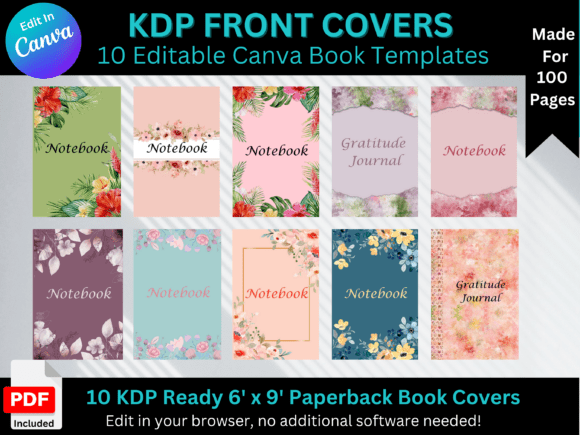
This particular set of templates, featuring 10 elegant floral designs, is built for a very specific and popular niche: 6 x 9 inch paperback interiors with 100 pages, a standard for journals and notebooks on platforms like Amazon KDP. The "floral" aesthetic offers a timeless, organic appeal. It communicates creativity, calm, and a touch of sophistication. For a brand identity centered on wellness, mindfulness, gardening, or lifestyle, these visuals are a natural fit. They function as a display font for your cover—immediately setting the tone before a single page is turned. The style isn't loud or chaotic; it's designed to be inviting, making it ideal for products meant to be personal companions.
Practical Application: Beyond the Notebook
While the primary use is clear, the value of these Canva Editable Book Front Covers extends far beyond a single product. Consider them as foundational design assets for a broader project. The floral motifs and customizable color palettes can inform an entire brand identity. Use the same visual language for your website header, your social media graphics, or even packaging for related physical goods. This creates a cohesive, recognizable aesthetic across all touchpoints, which is crucial for building trust and recognition with your audience.
The real power lies in the editable Canva link. This transforms the templates from static images into dynamic tools. A content creator launching a "Spring Wellness Journal" can easily swap out the color scheme to reflect seasonal pastels. A small business owner creating a branded notebook for their team can insert their logo and adjust the typography to match their existing modern typography standards. This level of customization ensures the final product doesn't look like it came from a generic template, but rather feels intentionally crafted. It's a practical solution for those who need professional results without the time or budget for a custom design from scratch.
Making It Work for Your Niche
The key to leveraging these templates effectively is alignment. A floral design isn't universal. Ask yourself: Does this visual personality resonate with my target reader? For a journal aimed at minimalist architects, it might be too busy. But for a gratitude journal for gardeners, a wedding planner, or a self-care guide, it's perfect. The serif or sans serif font choices within the templates should also be evaluated. Do they support the readability and visual hierarchy you need? The included step-by-step instructions are there to help you navigate these decisions, ensuring you're not just changing colors, but making strategic design choices.
When using any commercial font or design asset, clarity on licensing is non-negotiable. These templates are designed for commercial use, which is essential for publishers and entrepreneurs. However, always review the specific terms. Canva's own licensing, combined with the asset creator's terms, will govern how you can distribute the final product. This is part of professional publishing—understanding the tools you use. The goal is to create a product that not only looks good but is legally sound for sale.
The Efficiency of a Ready-Made Framework
In the end, a product like this bundle of Canva Editable Book Front Covers is about efficiency. It eliminates the "blank canvas" problem that stalls so many projects. It provides a tested, aesthetically pleasing framework that you can then infuse with your unique content and brand voice. For the entrepreneur testing a new product idea, for the blogger expanding into physical goods, or for the hobbyist wanting to gift a beautifully crafted notebook, it removes a significant barrier. It’s a practical example of how modern design assets are empowering individuals to produce work that stands shoulder-to-shoulder with traditionally published material, one customizable template at a time.